
 Forget everything you thought you knew about battery anodes. Graphite, the undisputed king of lithium-ion technology, has a dirty little secret: it hates sodium ions. It just doesn’t let them in. That single chemical incompatibility has been the brick wall holding back sodium-ion batteries from taking over the energy storage world. But what if we could trick the system? What if we took that same cheap, abundant graphite and twisted it into something that actually works? That is exactly what Spherical Graphite precursors delivers, and it is not just an incremental improvement. It is a paradigm shift.
Let’s get one thing straight. Traditional hard carbon is a mess. It is usually derived from biomass or resins, resulting in a material that is structurally inconsistent, riddled with random pores, and shaped like jagged shards of glass. You cannot pack those shards tightly into an electrode. You waste space. You waste energy density. You end up with a battery that is “good enough” for a lab experiment but a nightmare for mass production.
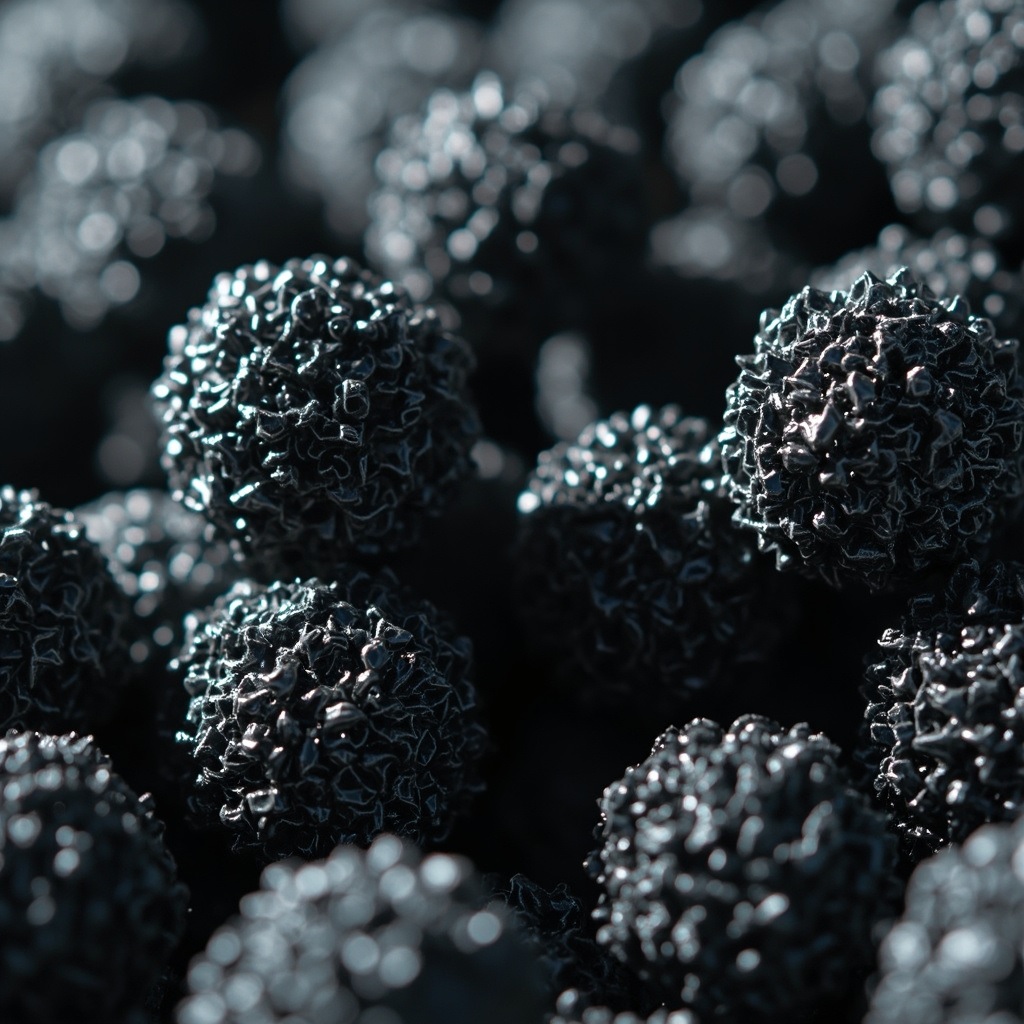
Spherical hard carbon solves the geometry problem. By starting with a graphite precursor and engineering it into a perfectly rounded sphere, we achieve a packing density that flat, irregular particles can only dream of. More material fits into the same volume. That means higher energy density per cell, plain and simple. For a battery technology that is already fighting for market share against the lithium-ion juggernaut, this is the kind of raw performance advantage that turns heads in procurement departments.
But the magic does not stop at the shape. The conversion process from graphite to hard carbon is where the real engineering happens. We are not just crushing graphite into balls. We are systematically destroying the long-range crystalline order that makes graphite useless for sodium storage. The result is a disordered carbon structure with just the right amount of turbostratic layering. The sodium ions finally have a home. They can slide in, intercalate, and adsorb onto the nanopores with a level of efficiency that amorphous carbons cannot touch.
What does this mean for your product? It means a battery that charges faster and lasts longer. The spherical morphology reduces the tortuosity of the electrode. Ions do not have to navigate a maze of sharp corners and dead ends. They take a direct path. That translates to superior rate capability. When your customer wants a full charge in fifteen minutes, a spherical hard carbon anode delivers. When they need consistent cycle life over thousands of charges, the structural integrity of the sphere holds up far better than the brittle edges of a conventional particle.
The supply chain argument is even more compelling. Graphite is not a boutique material. It is mined, processed, and traded in massive volumes. By using graphite as the precursor, we bypass the volatility and inconsistency of biomass feedstocks. No more worrying about whether this season’s coconut shells have the right lignin content. No more batch-to-batch nightmares from resin suppliers. You get a consistent, scalable, industrial-grade material that fits into existing manufacturing lines with minimal retooling.
This is not a science project. This is a commercial weapon. Spherical hard carbon from graphite precursors takes the theoretical promise of sodium-ion batteries and turns it into a practical, high-performance reality. The energy density gap with lithium-ion is closing. The cost advantage is widening. And the anode material that makes it all possible is finally ready for prime time. If you are still planning your next-gen battery around a flat, jagged, or biomass-derived carbon, you are leaving performance on the table. The sphere is the future. Grab it.